Watch Out For Deer!
It is that time of year again. October through December is considered “deer season”. It is at this time at Latuff Brothers Auto Body when we see the most damaged cars d involved in automotive deer collisions. While it is difficult to avoid this completely there are some things you can do to reduce your chances of hitting one. Here is a list of some tips you can use to help avoid hitting a deer.
1. Be attentive when driving especially during sunset to midnight and the hours shortly before and after sunrise and in deer crossing zones.
2. At night use high beam lights when there is no oncoming traffic. High beams will help illuminate the eyes of deer.
3. Brake firmly when you notice a deer in your path. Be sure to stay in your lane. Many more serious crashes occur when drivers swerve and lose control of their car. Also, a deer hit most likely would be a comprehensive claim on your insurance versus a collision claim if you swerved and hit a tree instead.
4. Slow down. A lower speed will increase your reaction time and may give you time to stop and avoid hitting the deer.
5. If you see one deer, chances are there are several in the vicinity so be on guard. Deer tend to travel in numbers.
We hope these tips help keep you safe and sound. If you can’t avoid the deer remember not to touch the deer because a frightened deer could hurt you. Call 911 and your insurance company to report the collision. Be safe and remember your car can be replaced but you can’t.
Just for fun, check out this 30 second video for a different take on the deer collision.
Bumper Repairs
Recently we had a customer with a Toyota Prius that had some bumper damage. Upon inspection of the vehicle, we found damage behind the bumper cover to the absorbers and reinforcements. The customer asked, “Why can’t you just replace the cover or repair the absorbers and reinforcements? I dont care about the stuff I can’t see.” The issue with that is safety. While it may seem cost effective to repair damage to bumper components, specifically impact energy absorbers and reinforcements, there is no way to certify that a repaired part will function as originally intended under all future operating conditions and subsequent collisions. Original Equipment bumper components comply iwth Federal Motor Vehicle Safety Standards established under the National Highway Traffic Safety Administration. So it is recommended to replace damaged bumper impact energy absorbers and reinforcements with genuine new original equipment replacement parts only! Please don’t risk refusing a quality repair to save money and risk harm to you and your passengers. At Latuff Brothers, we won’t take that chance.
Terry Will Be Missed
Latuff Brothers Family and Staff would like to say goodbye to longtime employee and friend Terry WalKosz.
This is the Story of Latuff Brothers employee Terry Walkosz, who has worked at Latuff Brothers for over 40 years.
On March 23rd, 1970 Terry started his career at Latuff Brothers Auto Body. He started as a technician performing front end alignments. Later in the mid 1970’s he performed all types of duties including pulling frames, and body work. In 2000, he became the parts manager. Terry really enjoyed all the interaction and joking around with our parts vendors, sales folks, and co-workers. He enjoyed grilling out and cooking for the entire crew on Fridays. And all of us here at the shop REALLY appriciated Terry’s grilling skills. To sum it up, many great years, many great stories and memories! We are all thankful and honored to have known Terry.
http://www.legacy.com/obituaries/twincities/obituary-print.aspx?n=terry-walkosz&pid=150419650
Looking For a Fuel Efficient Car?
Over the past few months it has really been hard to swallow the increases in fuel prices. This had us thinking about what new cars were out there that are fuel efficient and of good value? I came across an article that listed 30 cars that get 30 or more miles per gallon at CNBC.com. http://www.cnbc.com/id/42326638/. With experience in repairing and driving many of these models, we thought we’d give you a quick highlight of some of the fuel efficient new models out there we like. Here are our top picks:
#5 2011 Ford Fiesta
Type: subcompact
Combined MPG: 33
Suggested Retail Price: $13,995
KBB Fair Purchase Price: $13,785
Five-year fuel & finance expense: $24,741
U.S. automakers have been trying to play catch-up with their Japanese counterparts and in the case of the Fiesta, Ford not only catches up, “it’s better,” according to the Kelley Blue Book review. It’s got “style, interior quality, driving dynamics” and, of course, fuel efficiency. And with a name like Fiesta, which means “party” in Spanish, you know it’s going to be fun!
#4 2011 Ford Escape Hybrid
Type: crossover
Combined MPG: 32
Suggested Retail Price: $30,825
KBB Fair Purchase Price: $29,900
Five-year fuel & finance expense: $40,707
The Escape is a compact crossover, which offers plenty of room to seat 4 to 5 adults, and it has a lot more cargo space than a traditional SUV, Gutierrez said. Plus, being a hybrid, it gets great fuel efficiency, which makes it “great for someone with a family who likes to travel a lot,” Gutierrez said.
#3 2011 Toyota Camry Hybrid
Type: mid-size sedan
Combined MPG: 33
Suggested Retail Price: $27,435
KBB Fair Purchase Price: $26,612
Five-year fuel & finance expense: $35,187
The Camry, Fusion and Altima are all mid-size hybrids. “These really appeal to someone with a commute,” Gutierrez said. “They comfortably fit adults or adults and kids.” Plus, good cargo space for all those trips to Home Depot and Costco. Gutierrez said he’s not sure they’re worth the premium you’re paying for the hybrid version but “overall great vehicles.”
The Camry hybrid is the “rare hybrid that makes both environmental and financial sense,” Edmunds.com says in its review. “It’s quicker than a regular four-cylinder Camry, it’s far better on gas and it’s only marginally more expensive than a comparable non-hybrid four-cylinder model,” Edmunds says. Plus, it’s got a “spacious interior, cushy ride, energetic acceleration, excellent crash test scores.”
#2 2011 Hyundai Sonata
Type: mid-size sedan
Combined MPG: 28 (35 highway)
Suggested Retail Price: $19,915
KBB Fair Purchase Price: $19,915
Five-year fuel & finance expense: $33,710
Hyundai has made great strides catching up with their Japanese counterparts, Gutierrez said. The Sonata has been a “giant leap forward for Hyundai and kicked off its recent rise to respectability,” according to the Kelley Blue Book review. It’s stylish and combines a “well-appointed interior, world-class powertrain and newfound levels of quality … An instant favorite,” the review says.
#1 2011 Toyota Prius
Type: compact
Combined MPG: 50
Suggested Retail Price: $22,410
KBB Fair Purchase Price: $22,186
Five-year fuel & finance expense: $31,009
It was the first mass-produced hybrid and is the best-selling hybrid, but
and the best-selling hybrid on the market but “it no longer carries the original car’s quirky, new-age image,” according to the Kelley Blue Book review. It’s gone from “eco-novelty” to the “vehicle of choice for those desiring to spend less on fuel and more on comfort and versatility.” The Prius’s fuel efficiency — an estimated 51 mpg in the city and 48 on the highway – is “unmatched in its class,” KBB says.
Latuff Brothers Auto Body wishes you the best in your quest to save money on fuel cost. Remember, to ensure you’re getting the most fuel cost savings make sure tires are properly inflated, don’t carry unnecessary cargo in your vehicle, use the gas and breaks conservatively, use the air conditioning as needed with the windows up, and finally enjoy the great outdoors by biking and walking whenever feasible.
Until next time, Latuff Brothers Auto Body
What is an I-CAR?
Are you are in a field of work that requires ongoing education? I was talking with a friend last week in the insurance industry. They have annual continuing education requirements to remain licensed. They asked, ”What ongoing education there was for the auto body industry?”. With the constant change in technology and design in the manufacture of new automobiles, the auto body industry must also keep up with these changes. Ongoing training comes from companies such as DuPont, 3M, major auto manufacturers, and I-CAR. So what is I-CAR?
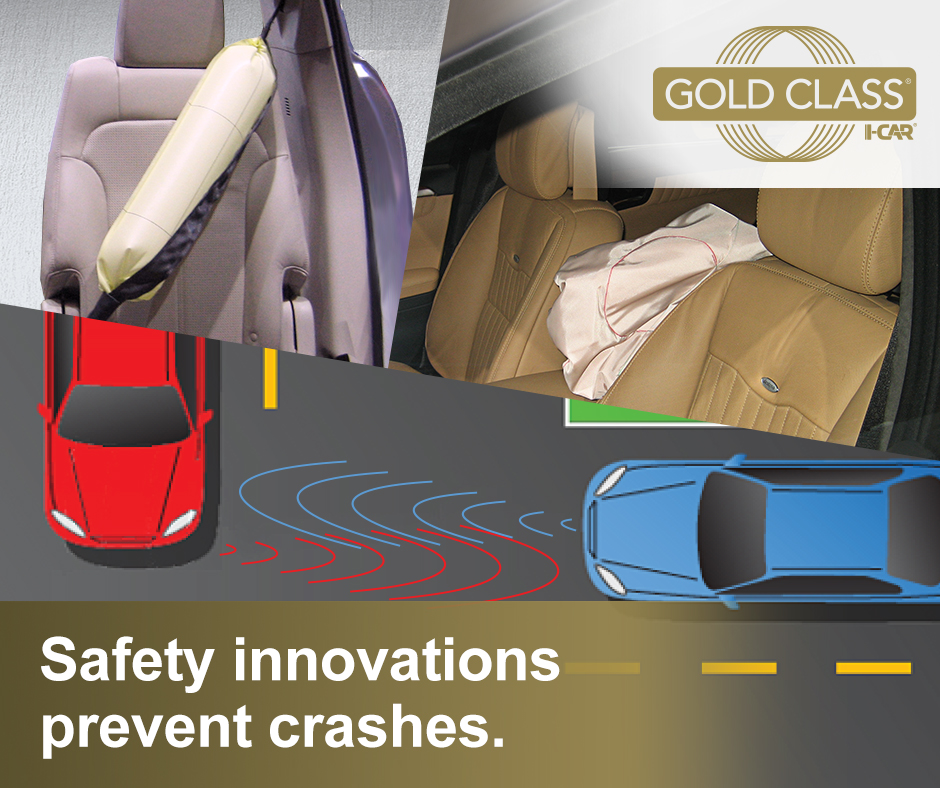
I-CAR was formed by the collision industry in 1979, I-CAR, the Inter-Industry Conference on Auto Collision Repair, is an international, not-for-profit training organization. All I-CAR activities and resources focus on helping the industry achieve a high level of technical training. I-CAR develops and delivers technical training programs to professionals in all areas of the collision industry. In addition, I-CAR provides a communication forum for anyone interested in proper collision repair. I-CAR’s primary funding is derived from student tuition and services. This assures that I-CAR can remain unbiased in developing programs and services on an industry-wide basis. I-CAR’s mission is that I-CAR will be the leader in research, development and delivery of quality, convenient, cost-effective educational programs for the collision industry.
The mission will be fullfilled by:
- Raising the level of knowledge and skills required of individuals involved in the repair process.
- Preparing individuals for career opportunities and advancement.
- Administering programs to recognize professional achievement.
- Improving communication and promoting the value of education throughout the collision repair, insurance, and related industries.
- Creating public awareness of a complete and safe repair.
Latuff Brothers is proud to have been a founding member of the I-CAR program since the inception in 1979. As always, Latuff Brothers is committed to staying on the cutting edge of technology in order to perform the highest quality repairs on today’s most advanced automobiles.
For more information on I-CAR visit their website at www.i-car.com.
Until next time!
Latuff Brothers Auto Body
Seventy Eight Years In The Making!
Well, the day has finally come for the first Latuff Brothers Auto Body Blog. Latuff Brothers opened its doors as an auto body shop in 1933 with two brothers, Mike and Joe Latuff. 1933 was a time when Fred Astaire and Ginger Rogers were creating dance crazes, the popular board game Monopoly was created, and cars were made with wood and steel. There have been several changes over the past 78 years. Today Lady Gaga tops the charts, the Nintendo Wii game system is selling out at stores, and cars are now made of high strength steels, plastics, and composite materials. I found it fascinating to see how the costs of things have changed as well. Check out this list.
1933 2011
Gallon of Gas $0.10 $3.60
New Car (average) $600 $28,000
Steak (1lb) $0.20 $7.00
Avg. Household Income $1,900 $81,000
Average Home $7,000 $260,000
My how things have changed! Did you see the photo above of a repair invoice from 1939 to repair a fender? As time brings continued change, we here at Latuff Brothers have a great respect for the past while keeping a focus on the future. We look forward to bringing you weekly updates, not only related to the auto body industry, but also interesting stories as well as tips and advice from the experts.
One thing that has never changed is our commitment to safety, excellence and the environment. So, from our family to yours, thanks for so many great years of business. We are looking forward to sharing our experiences in auto body repair with you. So, until next time!
As always, we are better for you, your vehicle, and your environment!
Latuff Brothers Auto Body